Every run in Candy Jump is built from a small family of obstacles, each with its own personality. Learn what each one demands, and the game transforms from a reflex gamble into a series of solvable puzzles.
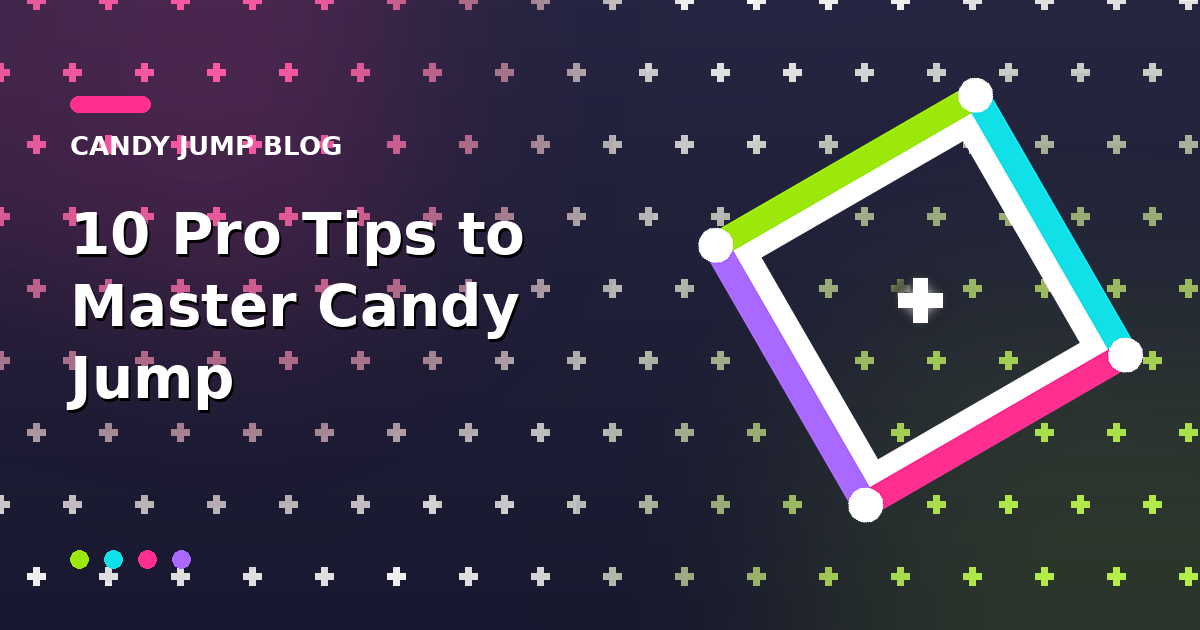
The rotating square (diamond)
What it is: a four-sided frame spinning around its center — green, cyan, pink and purple, one color per side — usually presented corner-down like a diamond.
The catch: unlike a circle, a square's crossing point sweeps past corners, where two colors meet. Cross during a corner transition and you can clip the neighboring color.
The strategy: commit when the middle of your color's side is at your crossing path, never the edge. Mid-side crossings give you the widest safety margin on both sides of your timing.
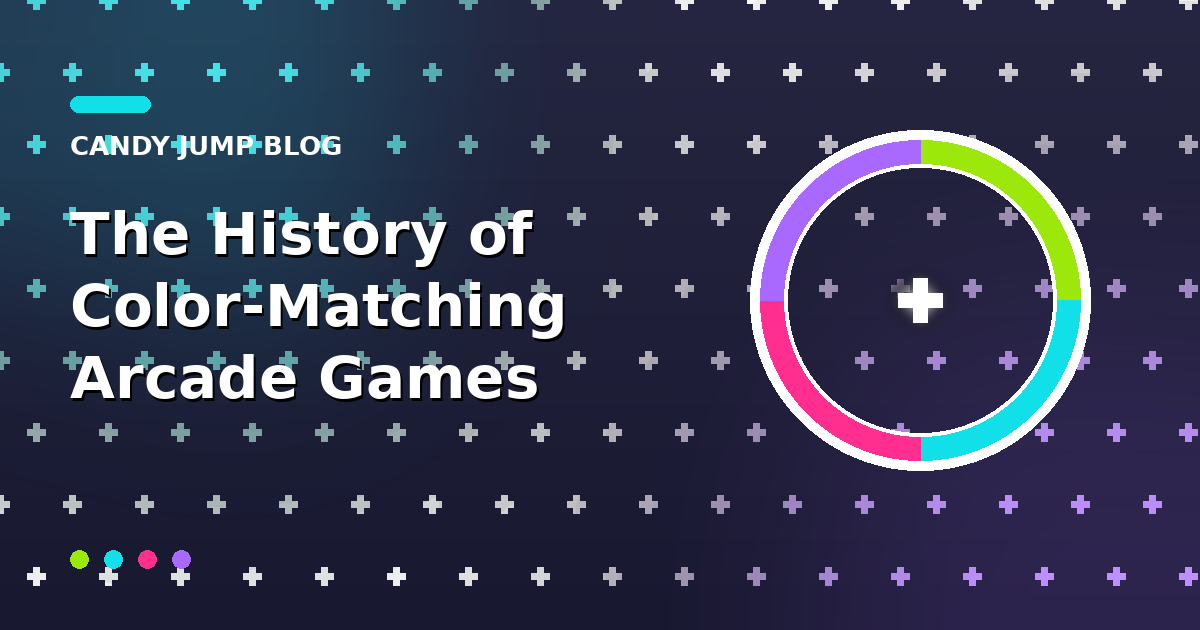
The color ring (circle)
What it is: the classic wheel — four quarter-arcs of color rotating at constant speed.
The catch: pure timing. The ring is the most predictable obstacle, which paradoxically causes lazy reads and careless deaths.
The strategy: watch one full rotation from below before your first crossing of each ring. You'll know the speed, the direction, and exactly when your quarter arrives. Then it's a metronome — cross on the beat.
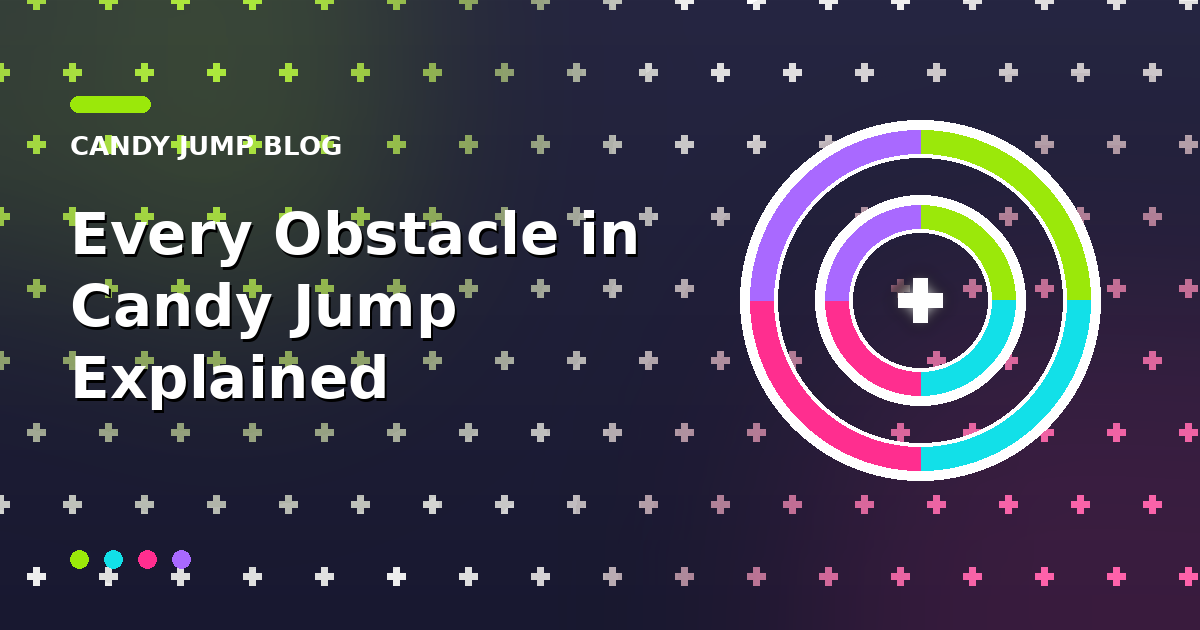
The double ring
What it is: two concentric circles spinning in opposite directions. You must pass through both — the outer ring, the gap between, then the inner ring.
The catch: your color aligns on both rings only periodically, and the alignment window is short. Rushing the second ring after clearing the first is the classic double-ring death.
The strategy: treat it as two separate obstacles. Cross the outer ring, then hover in the gap between the rings — yes, there's room — and wait for the inner ring's window like you would any normal circle. Two patient crossings beat one heroic dash every time.
The pickups between
The star (+): sits at every obstacle's center and awards your point. You collect it in the natural path of a clean crossing — never distort your timing for it.
The color switcher: the small four-color pinwheel between obstacles. It changes your ball to a new random color, instantly voiding whatever plan you had. The rule is absolute: switcher means stop and re-read.
Reading the rhythm of a run
Obstacles arrive in a fixed vertical rhythm: obstacle, switcher, obstacle, switcher. Once you internalize that cadence — cross, collect, reset, read, cross — the game stops feeling like chaos and starts feeling like a dance with four colors. That's when the big scores come.